Reliable Agent Skills Need Governance, Evaluation, and Maintenance
Agent skills become reliable when teams treat instructions as maintained operational assets with clear ownership, routing, evaluations, and approval boundaries.
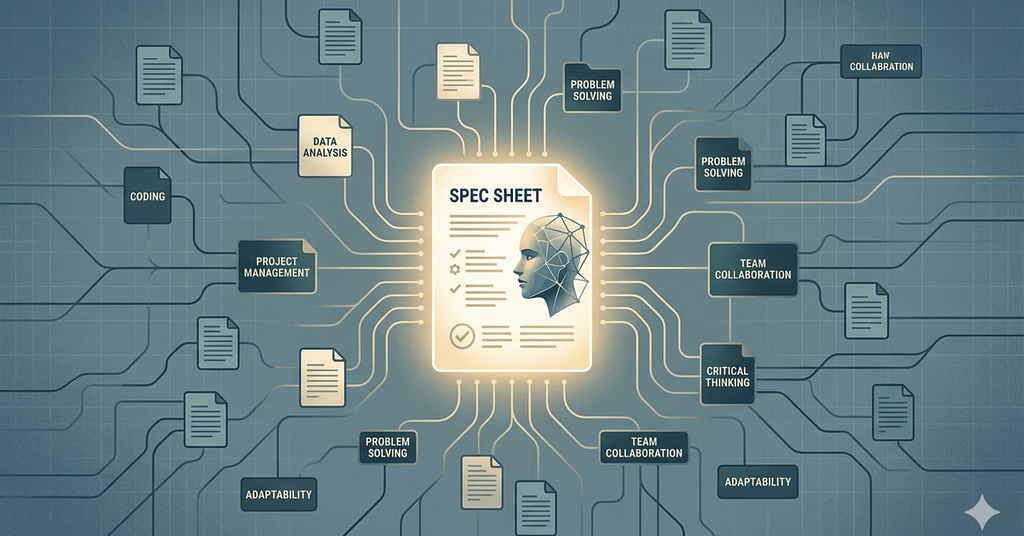
Writing an agent skill is straightforward. Keeping a growing skill library accurate, discoverable, portable, and safe to change is the harder problem.
Lab829 maintains a first-party skill library used across several coding-agent environments. That work has made one limitation clear: an instruction file is a snapshot. Repositories change, commands move, product interfaces evolve, and a once-correct workflow can quietly become stale.
The useful question is therefore not, "Can we generate a SKILL.md?" It is, "What operating system keeps the skill useful after it is created?"
Skills and project instructions solve different problems
An agent skill is an on-demand cognitive mode for a defined kind of work. Project guidance such as AGENTS.md provides always-available orientation about the repository, tools, and constraints.
Those layers should complement each other. Project instructions should not contain every specialist workflow, and a skill should not repeat an entire repository's permanent context. Clear ownership reduces conflicting instructions and unnecessary context.
The Agent Skills specification provides a portable structural baseline. Repository-level instruction formats provide the surrounding project context. A useful implementation still needs local decisions about routing, approval gates, evidence, and verification.
The main failure mode is drift
Skills can become stale in several ways:
- A command or file path changes.
- A workflow gains a new approval boundary.
- Two skills begin to overlap and route the same request differently.
- Documentation describes behavior that the helper scripts no longer implement.
- A skill works in one agent harness but depends on assumptions unavailable in another.
These failures are difficult to notice from prose review alone. A well-written instruction can still point to the wrong command or produce the wrong operational behavior.
Authoring and auditing should be separate modes
The Lab829 library separates skill creation from skill review.
829-create-skill helps define ownership, triggers, structure, references, and approval boundaries for a new or revised first-party skill. skill-doctor audits existing skills, applies approved fixes, checks standards, and maintains evaluations.
That separation matters. The process that creates an artifact should not be the only process judging whether it remains correct.
Evaluations make preferences inspectable
Agent skills often encode preferences that ordinary code tests cannot fully evaluate: when a workflow should trigger, what evidence it must gather, when it must stop, and how it should hand control back to a person.
The Lab829 repository uses evaluation fixtures for first-party hubs and discipline-enforcing skills. These fixtures test trigger precision and workflow fidelity. They do not prove that every model will behave identically. They create a repeatable basis for reviewing whether the instructions still express the intended operating rules.
Automated checks support that review, but they do not replace human judgment. Changes to ownership, approval boundaries, or public claims still require accountable review.
Portability has to be designed
A skill library becomes more useful when its core instructions can work across Claude, Codex, Cursor, Pi, and other compatible environments without maintaining unrelated copies.
Lab829 treats the skill as the portable cognitive layer. Shared wrappers and orchestrator outputs carry common operating rules, while harness-specific behavior is kept to declared compatibility shims. That design reduces drift between environments and makes gaps easier to identify.
What teams should establish before scaling a skill library
A maintainable library needs:
- Clear ownership for each workflow.
- Precise triggers and aliases.
- Explicit approval and stopping conditions.
- References loaded only when the active task needs them.
- Evaluation coverage for routing and critical behavior.
- A review path separate from creation.
- A maintenance process for commands, paths, and external dependencies.
- Portability rules if several agent environments are supported.
This is governance, but it is practical governance. The goal is fewer contradictory instructions, less context waste, and fewer surprises when an agent moves from advice into action.
Lab829 applies these principles in the Agents repository and in the editorial workflow used to review this site. If your team is standardizing agent instructions, development workflows, or cross-harness governance, explore AI integration services or start a conversation with Lab829.